The Calakmul biosphere is huge – larger than the state of Delaware. In fact UNESCO has deemed it a world heritage site (Click here). The tropical dry forest is expansive combined with the adjacent biospheres in Guatemal and Belize makes the tropical forest the largest forest in Latin America outside of Brazil. Small El Eljido communities dot the road that cuts through the biosphere from Escarcega to Chetumal. Nearly half way through, a small town of Conhaus provided the perfect jumping spot into the biosphere. I stayed at some cabanas that are a tourism venture from a family. In talking with the patron, his family started on a farm with no electricity. They started this endeavor to make a change. They were more than friendly and cooked a good meal for me. There were plenty of chickens and livestock around the town. I asked him why the roosters started crowing at 2am. He shrugged his shoulders: “I don’t know, perhaps climate change. They never did that back on our farm”.
I met with Isamel at 5:00am to start our trek into the biosphere. Ismael was a honey farmer: “The jungle is rich and the bees have plenty of food. They are africanized and produce more honey than than before.” He is part of a collective that sells Calakmul honey to Germany.
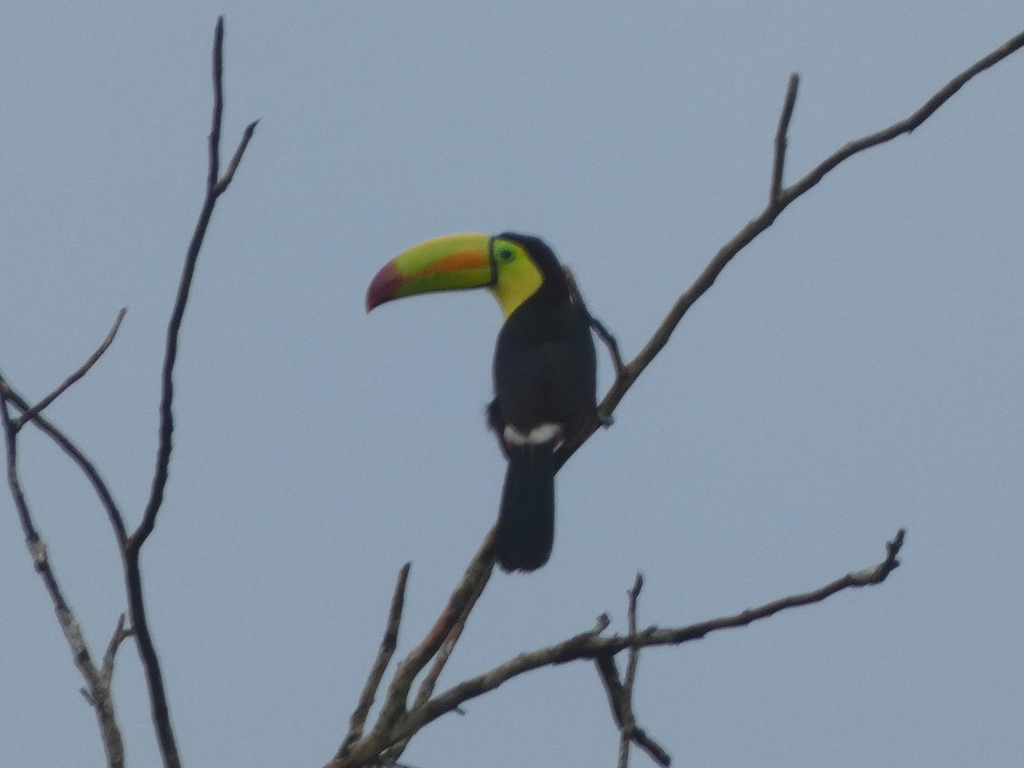
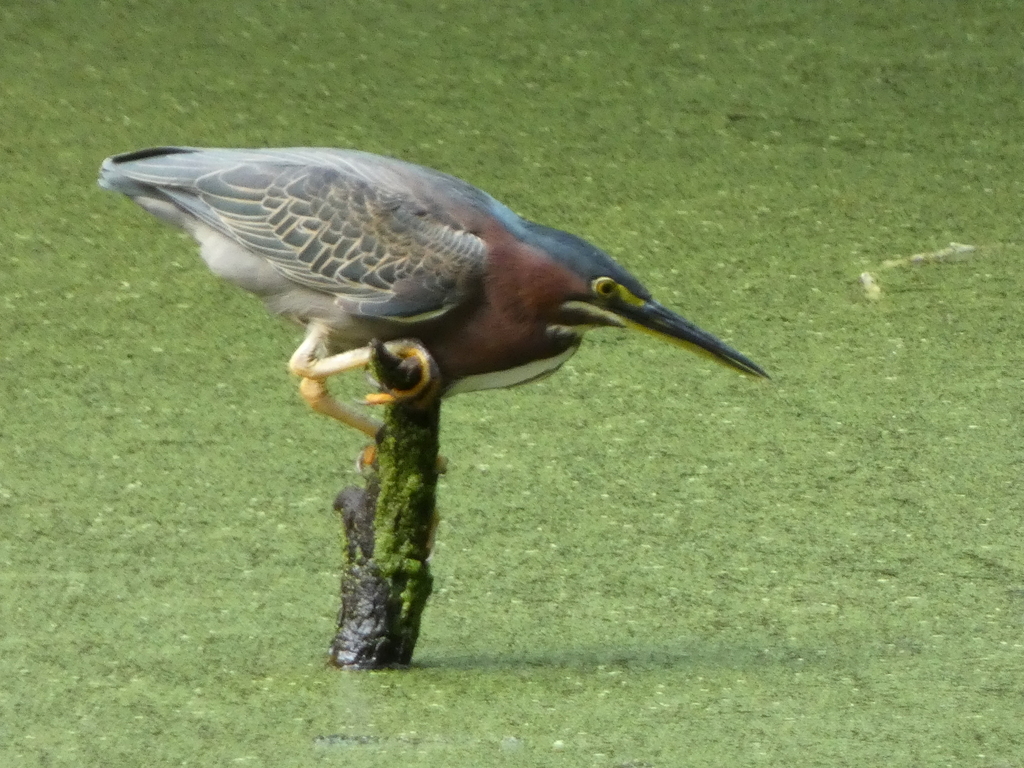
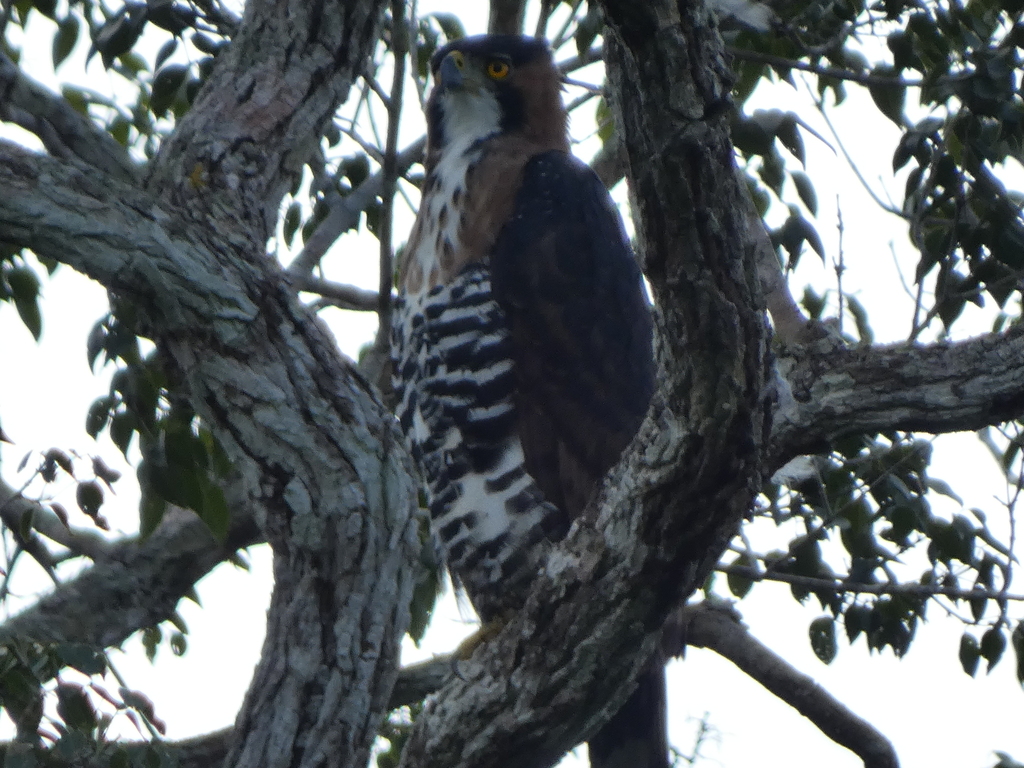
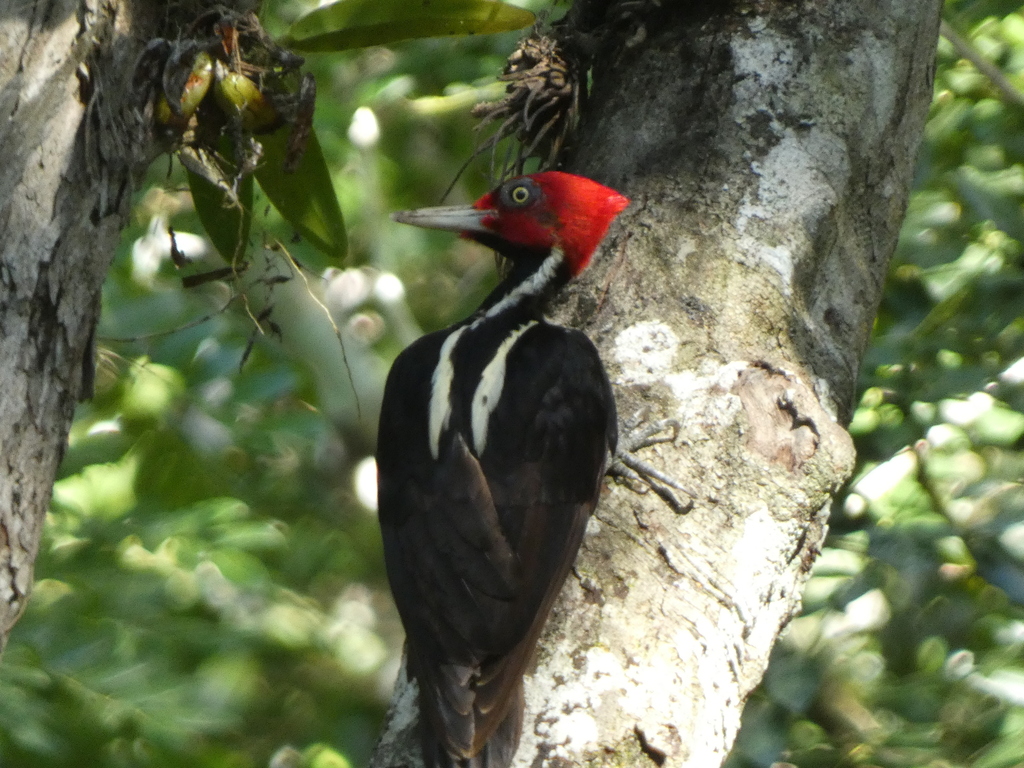
On the road to Calakmul, we pulled over and walked a trail to one to the small farms. “This is my father’s farm, he grows corn mandarin oranges, and white cedar.” We started our day here. From 6:00AM to 8:00AM as the morning broke, the forest came alive. We observed over 60 species of birds in just this short time.
At one point we were so focused on observing and identifying the different species, that we did not notice we standing in an ant swarm. The bites were everywhere (and I do mean EVERYWHERE) it took me about 10 minutes to get them all off me. Now I realize that ant are an integral part of a tropical forest, but they are everywhere. Massive highways of leaf cutter, red, and black ants zig zag everywhere. In fact when driving on the road, occassionally streams of ants so thick could be seen crossing the road it almost looked like small stream crossings. Visiting the farm and hearing the chainsaws in the back ground made me recall a recent story about the biosphere where 2600 hecta acres lost due to illegal Mennonite farming (link here). Isamel claimed the Mexican government is doing a better job managing the biosphere than Brazil. As the population increases, and financial pressures keep influencing farmers to grow their farming plots, we will see how much of that pressure the forest can withstand.
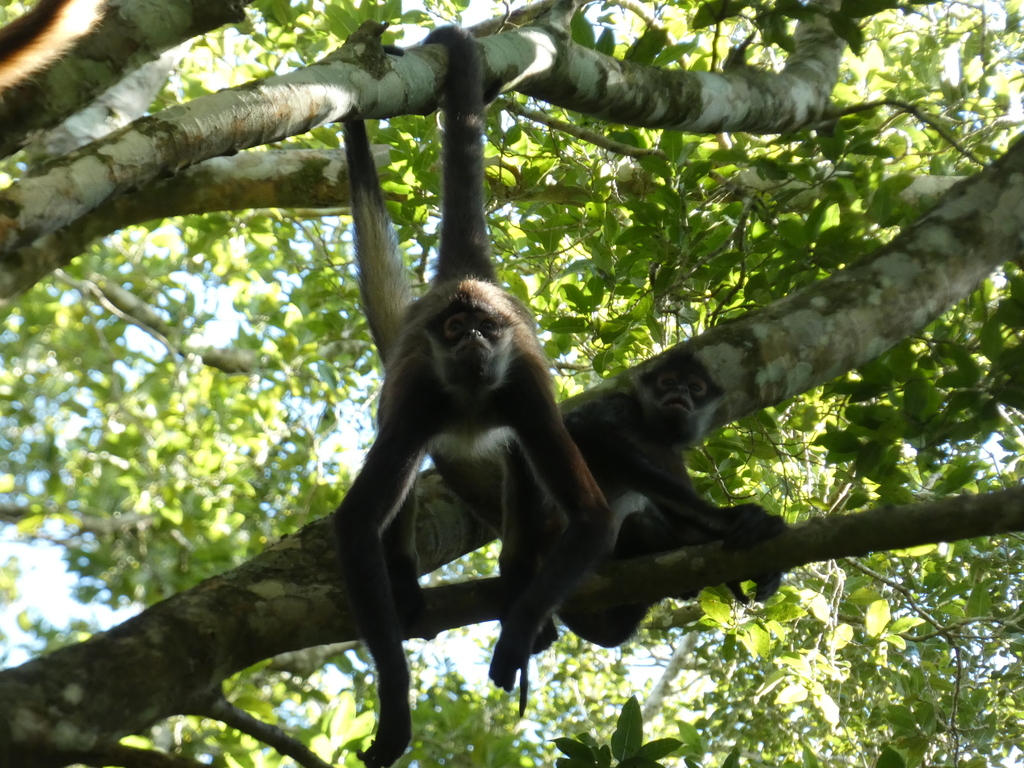
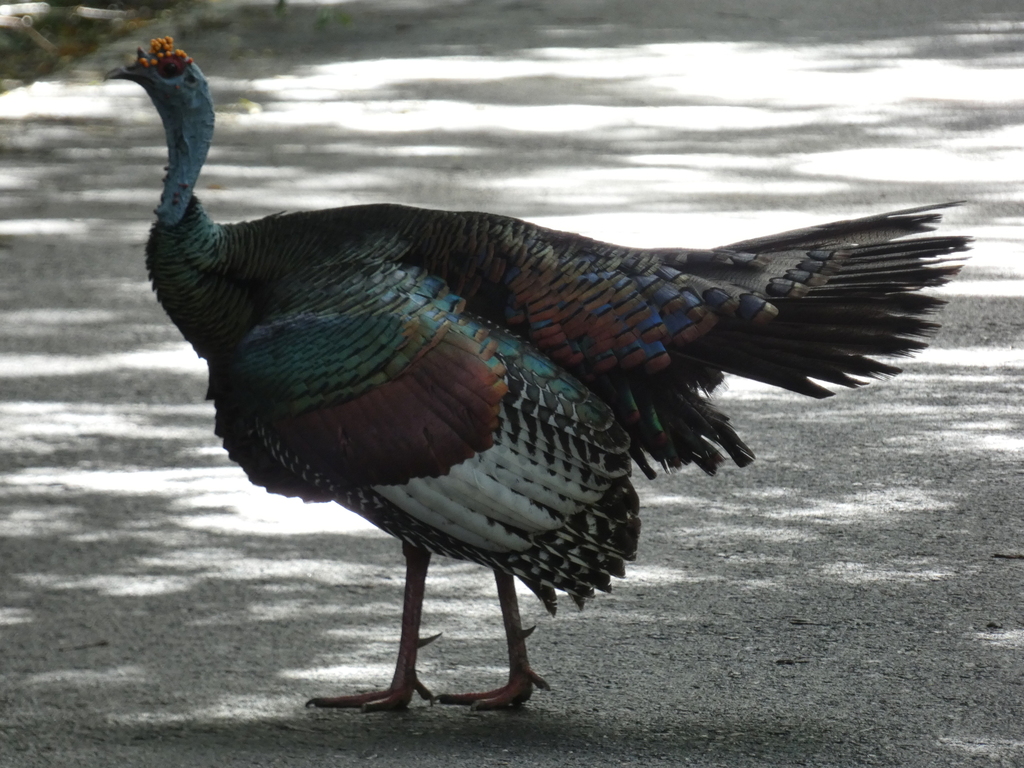
There were several trails. The trees were large. We stopped a few more place along the way to walk the the forest. It was absolutely mind bending to observe the sheer amount of biodiversity . Both spider monkeys and howler monkeys moved about the canopy roadways searching food, playing, arguing, and at time watching me as much as I watched them.
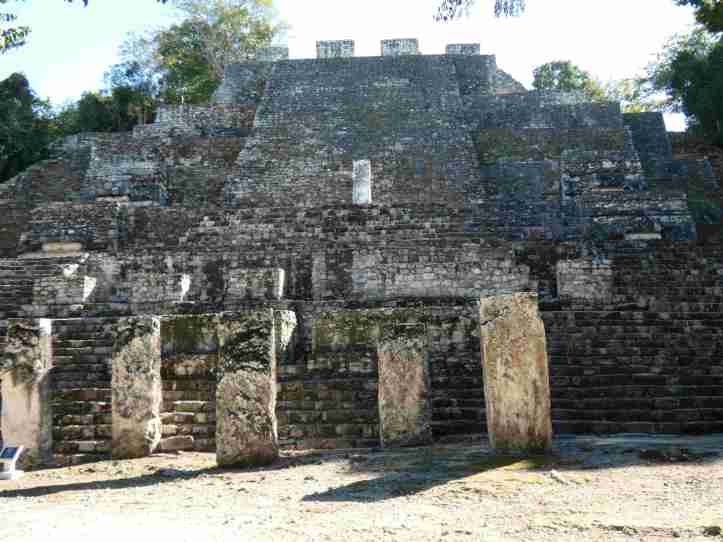
In the archeological zone the vegetation is cleared between the major Mayan constructions. The towering trees provide nice shade. Some of the temples lie completely below the canopy, and others extend well above the canopy. As a side note I visited Chichen Itza in late 80s/early 90s. It was not crowded, people climbed every temple, even picnicking atop of El Castillo. However when I visited in 2008, there were throngs of people and hotels. Structures and cordoned off. Although still magnificent, it became more like a museum. Visiting Calakmul reminded me of my first visit to Chichen Itza. I saw less than 20 people there. I climbed every structure exploring every nook and cranny. It amazed me!
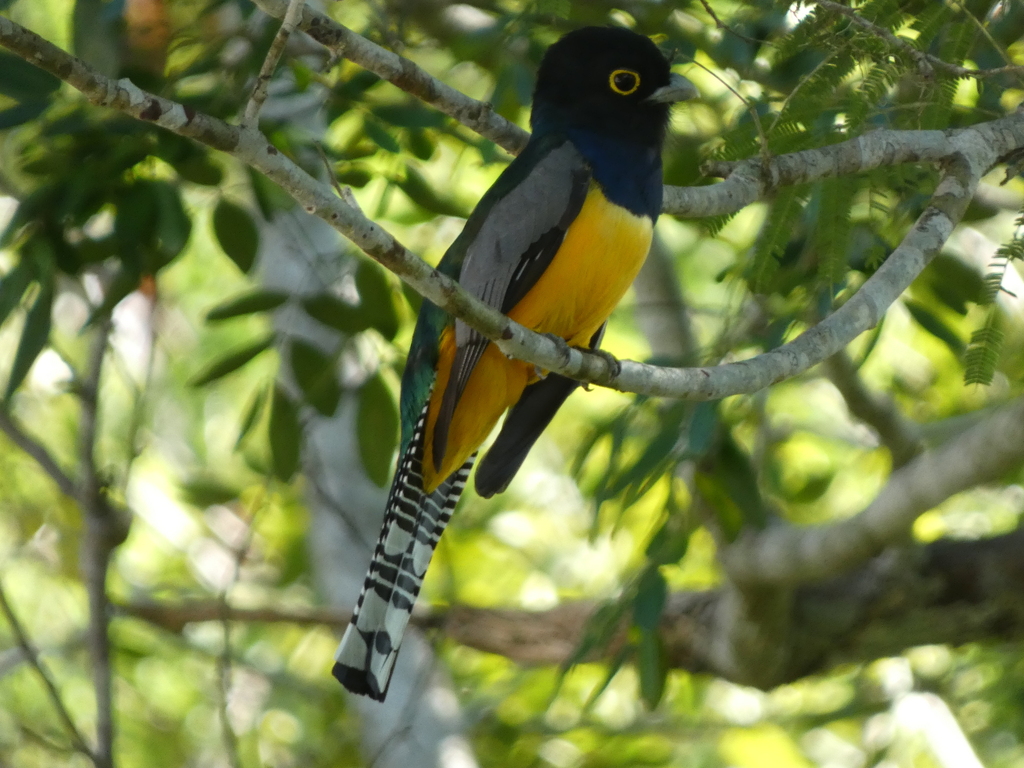
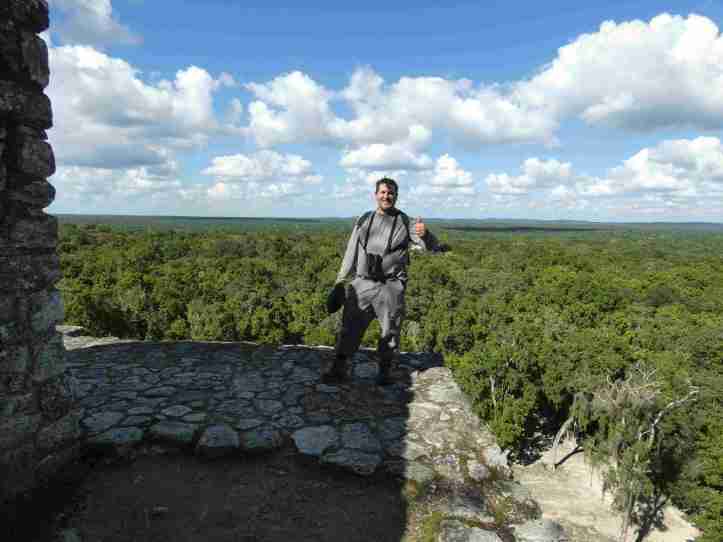
Structure B is the tallest structure at the site and the second tallest ancient construction in all of Latin America (Second only to El Mirador in Guatemala). El Castillo in Chichen Itza is 30 meters tall, Tikal is 70 meters tall, and Structure B is over 80 meters tall. I climbed to the top and beheld and amazing view. In all directions the horizon showed nothing but tropical forest. Peering really hard, the top of El Mirador could be seen even though it was 40 kilometers away. Above the canopy I was afforded views of birds, that I ordinarily would not see from ground.
Historically, the Mayan city state of Calakmul was a powerhouse. Inhabited since 500BC, Calakmul was known as the Snake Kingdom. It fought with both Tikal and Palenque. It had more than 6200 structures within a 30 square kilometer region which made it far more dense than Tikal. More stelae found at Calakmul (more than 110) than any other Mayan site. The stelae vary in size from one to four meters in height. When thinking about the massive amounts of stone moved both in small and large blocks, it was all done without the use of a wheel or domesticated animals. Just sheer people power. Not even 30 structures can be visited as many remain unexcavated or just permanent parts of the forest.
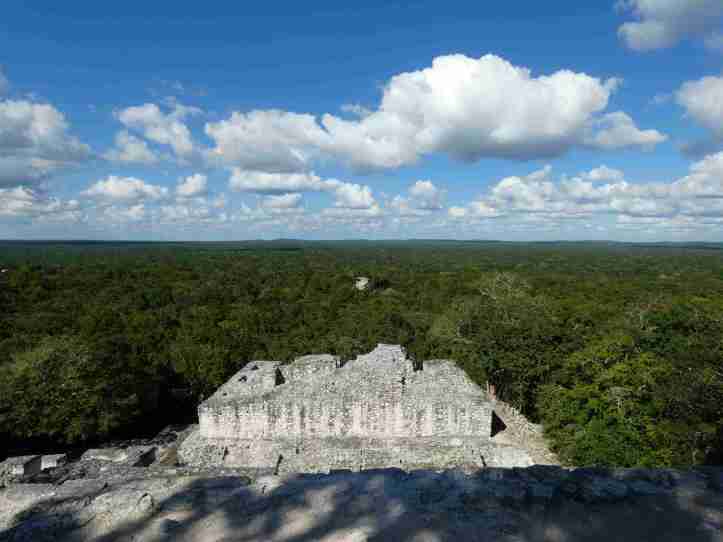
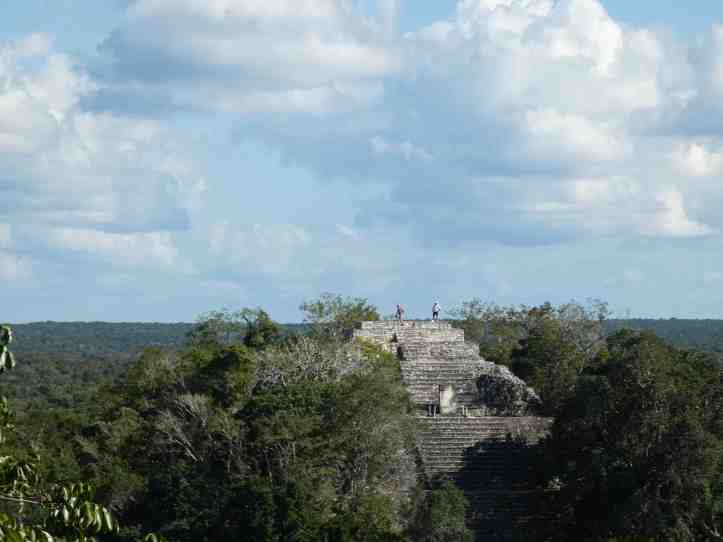
Mexico has made efforts to build the infrastructure to increase tourism on thus area. The road had been improved, there is now “train maya” which stops at all the significant archeological locations in the Yucatan, they have built a massive 100 room hotel in the middle of forest just 20 minutes away from the ruins. For now the impacts seem minimal, however time will tell if Calakmul will be Chichen Itza-fied, will stay the same, or perhaps will be reclaimed by jungle once again.
The Bat Volcano
Just outside the entrance to the Calakmul bisophere is the Bat Volcano. “El Volcan de los murcielagos”. It’s a small fee and a short walk. From this dry cenote (about 35 meters down) and 600 meets into the limestone, nearly 2-5 million bats emerge.There a few at first, but then a tornado vortex of millions of bats spew forth into the evening to feed. It was just amazing.
 Epic Odyssey
Wow, what an adventure! The birds are gorgeous, and it looks so peaceful there (minus the ant bites). Thanks for sharing your experience and your beautiful photos 🙂
LikeLike