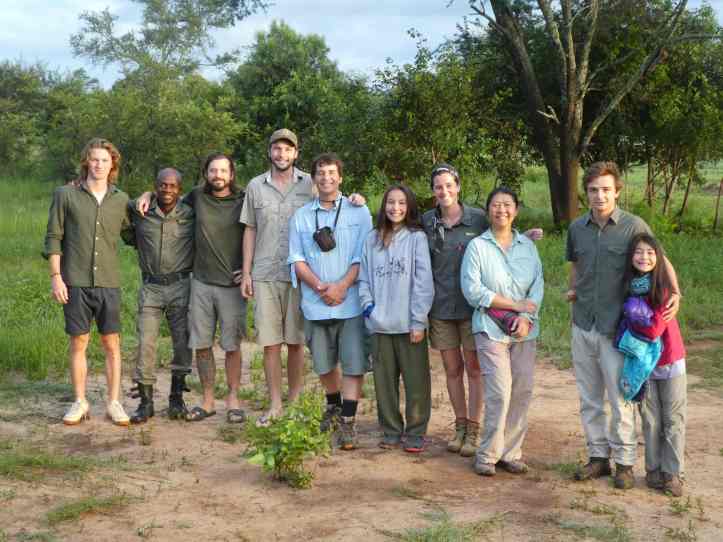
IMIRE was amazing! It made it onto Kylie’s top 7 world wonder list. The water was clean, the air was fresh, much of the land was unspoiled. People were working everyday to preserve the land and animals and develop in a sustainable way. It really was a shining example of what could be.
Working and interacting with the animals in a meaningful way felt fulfilling and important. Being around people who were so passionate about their work was equally inspiring and important for Alyssa and Kylie to experience.
Experiencing and participating in the conservation work, from community involvement, maintenance and repairs, to animal care and rangering was central to one of my missions of this odyssey we’ve embarked upon. It was both spiritually and tangibly fulfilling as a parent and as a human.
Some lingering questions nipped at my conscious as we left.
IMIRE stands out amongst other game parks for its conservation work. Rather than take a quick buck to allow someone to kill an animal, they take less money for the realization that over time, those animals will bring in more money alive than dead. They also stand out for the huge amount of community work they do. It’s great for the animals, it’s great for the over 400 people they employ, but it’s still a white family running things. It is also subsidized primarily by the profits from their tobacco farm and international donations.
Even after huge amounts of community development and work, there were children who still believe the park is there to harvest rhino horns and leather. Desperate people sneak into the park to poach fish.
If IMIRE is a shining example of how to make conservation work, why can’t this success be duplicated by a Zimbabwean family or coalition? There is expertise out there. Why can’t funding sources get behind a Zimbabwean face? Why can’t this success be duplicated in other parts of Zimbabwe?
The repercussions of colonial rule extend to even now when Zimbabweans have difficulty accessing financial capital for large scale endeavors. Moreover, without access to significant capital and savinging they are more at risk during economic downturns and have difficulty weather the economic storm, while foreign Chinese, European, Indian, and North American investors have sigficantly more savings and ability to weather the storm.
What is the government doing? Any government can only act with money. There is little money in Zimbabwe. International sanctions prevent them from exporting to bring more money in. There is a 100% import tax. A volunteer moved by the lack of supplies at the local school sent a 5000 pencil donation via delivery to IMIRE for the local school. The government assessed a $600 value tax. This meant that on top of the $400 the volunteer had to pay to get the pencils, IMIRE had to pay $600 to pick them up from the international delivery office (Which opens all mail to assess taxes).
Zimbabwe background
IMIRE: Ranger Patrols and Conservation
IMIRE: Maintenance and Repair
IMIRE: Community Outreach
IMIRE: Reflections (Link TBD)
 Epic Odyssey