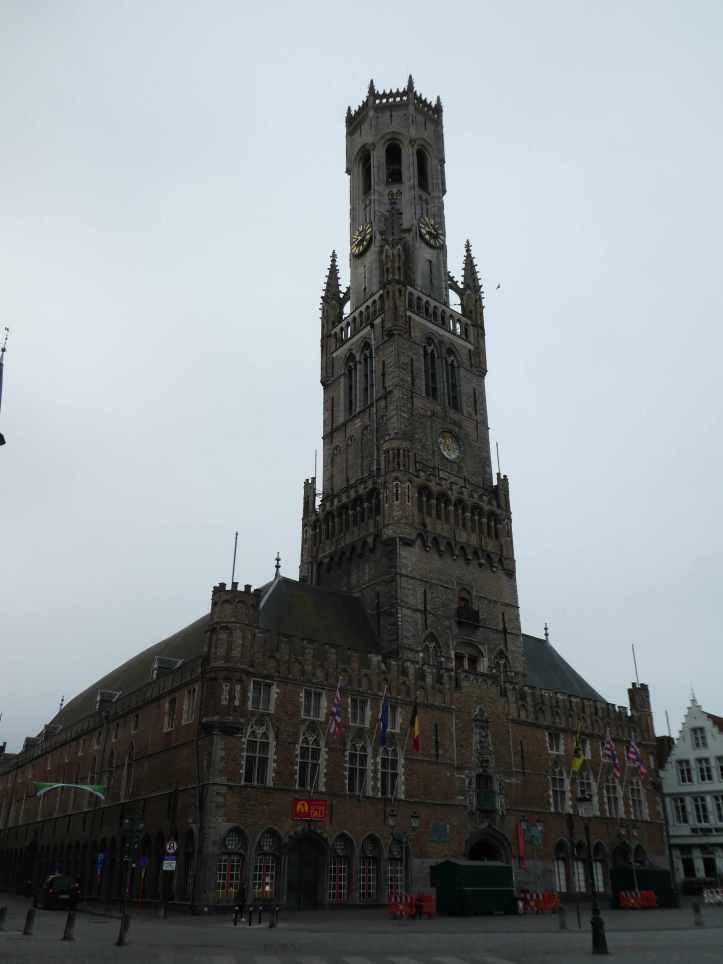
The next day, bright and early, we boarded the train to our first destination, Bruges and Ghent. With the slightly chilly weather, walking from the train station to the main city quickly warmed us up. Of course mom was delighted in the fact that we were so early there were no tourists, which meant no people in her photos. It was very peaceful and pleasant to walk through the slim cobble stoned roads, with brightly colored homes and businesses. It was very apparent why Europe was not car dependent. The old and slim roads were built before cars, so there was little infrastructure to accommodate any vehicles. Thus, bikes were everywhere – people rarely locked their bikes, just a small lock that locked the wheel to the frame and they’d leave it outside on the side of the road. The historic center of Bruges is a UNESCO world heritage site.

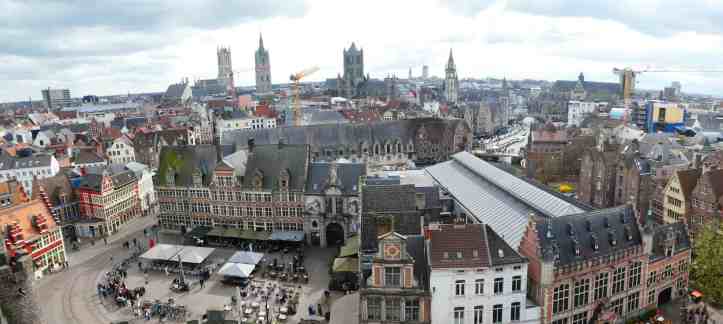
Belgium cities are home to town squares where large markets, gatherings, and important buildings live. The 5-ish story buildings are adorned with decorative detailing along the roofs, gold trim, tall windows, and had restaurants on the ground floor. Mom and I often wondered what the upper levels were used for – storage? Apartments? Office space? There were no obvious doors or stairs leading up, so we couldn’t speculate much.
We quickly learned that Europe is a very sleepy town. After around 9 with no breakfast, we were desperately seeking the famed Belgian waffles. The more we walked around, we noticed no shops were open. The hours often stated 11 or 12 as opening time. Even cafes, spots that advertised breakfasts, remained dark inside. I continued to make jokes that Europeans didn’t eat breakfast, they only had espresso and a cigarette for breakfast. Eventually we found a waffle shop that was open, ironically owned by immigrants. We ordered waffles with fresh fruit, whipped cream and hot chocolate. (picture) The fresh fruit was a nice touch, but I’ll admit I didn’t notice anything particularly different from a regular waffle you could get here in America.

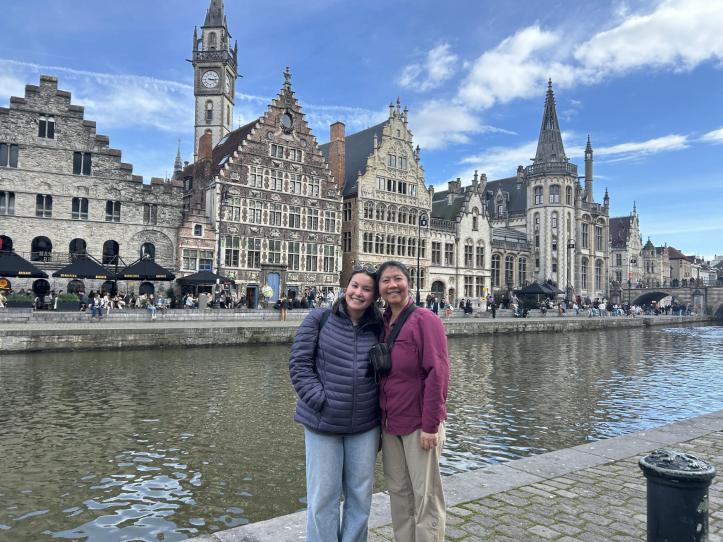
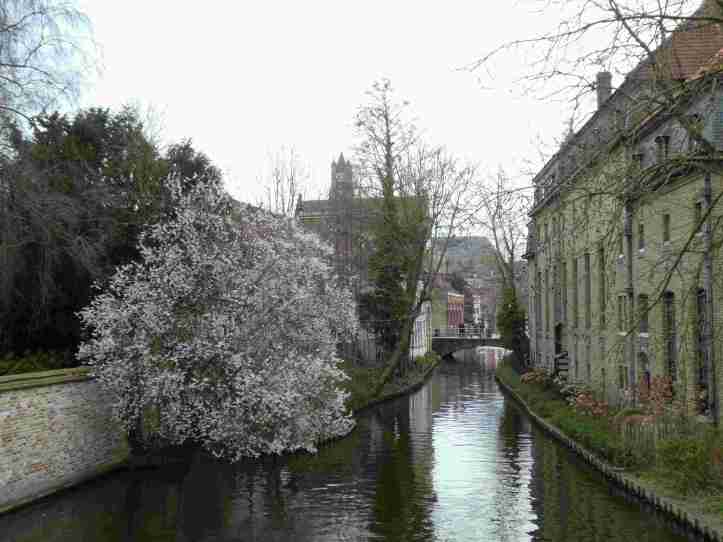
Bruges and Ghent are known for their canals. Bruges is also a coastal town, but since these towns were created before the development of railways, canals were an effective way of transporting goods and water to major cities. The canals were absolutely beautiful, with swans swimming by, trees hanging over the water, waterfront restaurants, and gondolas floating by.

We managed to finish walking through Bruges as soon as the large tourist groups arrived, giving us just enough time to get on the train to Ghent. Since we arrived in Ghent at a later hour, and it being a college and metropolitan area, and it being a weekend, the town was bustling! I personally loved this, seeing everyone walking around, taking pictures, young people hanging out with their friends, and overall more social. Bruges was primarily catered to tourists, but Ghent had regular city things that made it feel more authentic.
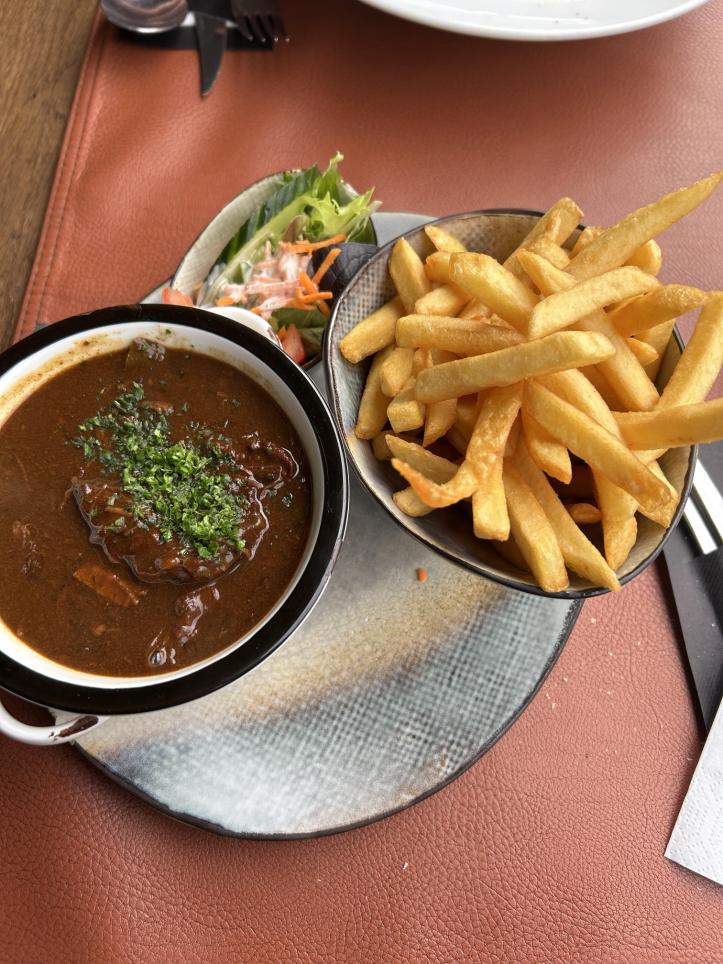
For lunch, we ate at a nice waterfront restaurant recommended to us by my Belgian coworker. We ordered two traditional Belgian dishes, waterzooi (a fish soup) and carbonnade de flamande (a beef stew). The waterzooi was not impressive, very watery and not very flavorful. On the other hand, the stew was FANTASTIC. Although red wine heavy, the beef was tender and the vegetables made it very hearty.

One of the main attractions in Ghent is the Gravensteen Castle. As the only intact medieval castle from the Flemish era, the castle is home to many historic relics and provides a complete story telling of the history and culture of the area. We got an audio tour guide, written and recorded by a Belgian comedian, the tour was filled with comedy and fun facts. I personally have never been inside a castle, and it was hard to picture what it looked like at its peak because none of the rooms were furnished or decorated. We were basically walking through several large empty rooms. The stained glass windows and the audio recording were beautiful and helpful for the visualization. Graventseen Castle is known for its expansive and diverse torture chamber

In comparing some historical places in the USA like Manzanar or Angel Island, the places are decorated with items, bed, desks, etc. The place is modeled to resemble the historical place and experience. It would’ve been interesting to see what Europe’s historical places would’ve looked like.






 Epic Odyssey
Amazing!! How long will you be in Europe? I’m heading over to Scotland in a few weeks and then Jim and I are going to Amsterdam and Denmark. it would be sooo cool if we crossed paths!
LikeLike
Dear Sharlene, you live an inspiring life!! How long have you been traveling? I’d love to connect when you return in the Bay Area, or meet you somewhere you travel! How many countries have you traveled, will you publish these wonderful notes and stories in a book?
Believe it or not, I’m still working in Wells, and now bought a house and living in San Francisco. Hope to catch you one day!
Warm regards, Grace Jin
LikeLike